Goa Embarks on ₹350 Crore Tourism Transformation to Redefine Indian Hospitality
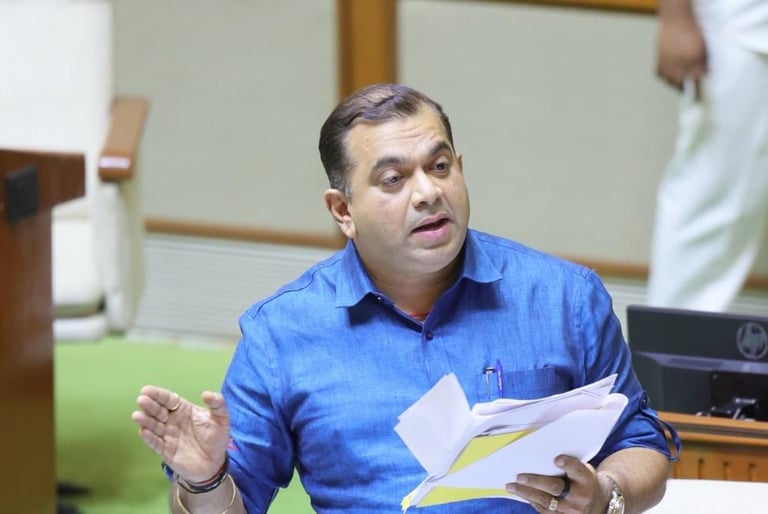
Tourism Minister Rohan A. Khaunte presented a comprehensive vision for tourism that aims to boost infrastructure, expand international connectivity, and promote Goa beyond its beaches.
The state of Goa has announced a transformative investment of ₹350 crore in its tourism sector, marking a significant shift in how the region positions itself within India’s hospitality landscape. Tourism Minister Rohan A. Khaunte, speaking in the State Legislative Assembly, unveiled a long-term vision focused on strengthening infrastructure, enhancing global connectivity, and expanding Goa’s identity beyond its beaches.
Minister Khaunte outlined that while the strategic approach will take time to realise fully, early signs of progress are already visible. From January to June 2025, Goa recorded 5.45 million tourist arrivals, comprising 5.18 million domestic and 0.27 million international visitors, reflecting an 8.4 percent year-on-year increase. June alone saw 834,000 tourist arrivals, bolstered by curated cultural experiences such as São João celebrations, forest stay tourism, and creek tours. Hotel occupancy during this period ranged between 70 and 100 percent, indicating sustained and diverse tourism demand. Contrary to concerns about a decline in tourism, the minister presented official data showing Goa has surpassed its pre-COVID numbers. The state hosted 8.06 million tourists in 2019, compared to 10.4 million in 2024, including nearly 9.94 million domestic and over 467,000 international visitors.
This represents a 39.5 percent rise in domestic and a 50 percent increase in international tourism from pre-pandemic levels. Connectivity remains central to the state’s tourism roadmap. Minister Khaunte confirmed the resumption of direct flights between Goa and Gatwick (UK) by the end of September. From October 5, Aeroflot will operate three weekly flights from Yekaterinburg, Russia, each carrying 210 passengers, potentially adding over 13,000 Russian tourists this season. Additional air routes with Poland, Kazakhstan, and Uzbekistan are also contributing to the rise in international arrivals. Goa continues to participate in global tourism promotion campaigns and industry roadshows, including the Prime Minister’s ‘Chalo India’ initiative, to increase international visibility and inbound travel.
Goa has become the first Indian state to officially adopt regenerative tourism, under its “Goa Beyond Beaches” initiative. Anchored in the principles of people, economy, and environment, the new tourism model places emphasis on quality experiences over high visitor volume. Central to this model is the Ekadasha Teertha project, a spiritual tourism circuit encompassing 11 historic temples, grouped into three thematic routes. GTDC buses have been deployed on these routes, and tenders have been floated to build nine common tourist facilities along the circuit.
The tourism overhaul is supported by national schemes such as Swadesh Darshan and PRASHAD. Two landmark cultural projects include the Unity Mall in Chimbel, with ₹161 crore sanctioned, and the Chhatrapati Shivaji Maharaj Digital Museum in Ponda, with ₹125 crore allocated (₹98 crore from the central government). Both initiatives are expected to enhance Goa’s cultural and educational offerings for both domestic and international visitors. Construction for the Unity Mall is already in progress, with final designs due by July 31.
The government plans to extend World Tourism Day celebrations in September into a month-long festival, aiming to turn the monsoon season into an inclusive and culturally rich tourism period. Traditional festivals, including São João, Sangodd, Shigmo, Chikhal Kalo, Carnival, and Deepotsav, are being revived under government support. The 2025 São João festival in Siolim attracted approximately 10,000 attendees, with 4.4 million digital impressions, while the third edition of Chikhal Kalo in Marcel drew over 9,000 participants. In efforts to enhance visitor safety and governance, several initiatives have been launched: the Tourist Helpline (1364) and Beach Vigil App, deployment of lifeguards and coastal police, appointment of a dedicated beach cleaning agency, booking of 318 touts between January and July 2025, and active coordination with Panchayats and the Animal Husbandry Department to address stray dog issues in tourist zones.
Recognising the contribution of shack operators, often regarded as informal brand ambassadors of Goan hospitality, the government is exploring regulatory and support measures to enhance their contribution to the evolving tourism model. Meanwhile, hotel and restaurant occupancy remains high, supported by a shift toward attracting higher-spending, quality-focused visitors. To support data-driven tourism policy, the Tourism Information Management Enterprise (TIME) system is being implemented. Currently operational across 25 percent of registered units, the platform will provide real-time insights into occupancy and tourist flow patterns.
Minister Khaunte concluded by reiterating that Goa’s tourism identity is evolving—no longer centred solely on its beaches, but now expanding to include spirituality, heritage, culture, wellness, and nature-based experiences. The joint efforts of the state and central governments, referred to as the “Double Engine Sarkar,” are central to delivering the ₹350 crore transformation vision. Goa’s approach provides a model of regenerative, responsible, and culturally rooted tourism that aligns with the larger goal of positioning India as the global capital of authentic hospitality.
Tourism Minister Rohan A Khaunte
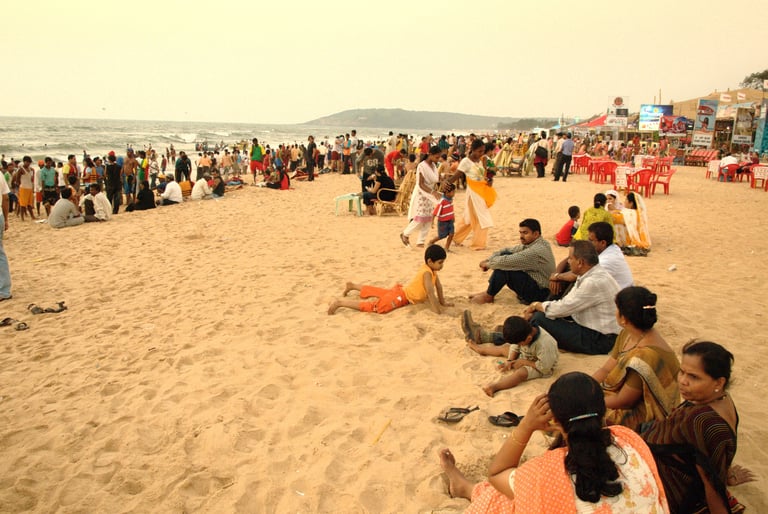
Calangute Beach, Goa
Share:-